The first Great Barrier Reef Commercial Marine Conference was successfully held in Cairns on Wednesday, 11 March 2026, bringing together 50 industry leaders, operators and suppliers for a focused event exploring the future of the commercial marine sector in Australia’s Great Barrier Reef region.
Sponsored by Tropical Reef Shipyard, the inaugural conference brought together a strong cross-section of the industry and was followed by a networking lunch, providing delegates with an opportunity to connect, share insights and discuss opportunities for collaboration across the region’s commercial marine sector.
A key highlight of the event was the official launch of the much-anticipated Australian Commercial Marine Economic Impact Study (EIS), presented by Ashley Page, CEO and Principal Economist at AEC Group. With more than two decades of experience supporting the marine sector, Ashley outlined the findings of the study, which quantifies the direct and flow-on contribution of Australia’s commercial marine industry to national and state economies.
The study found that the Australian commercial marine industry generates $50.93 billion in annual business output, contributes $25.16 billion to Australia’s Gross Domestic Product, supports 137,262 full-time equivalent jobs nationwide, and delivers $14.2 billion in wages to Australian households each year. The landmark report highlights the sector’s significant economic contribution and provides a critical evidence base to support industry advocacy, policy engagement and future investment.
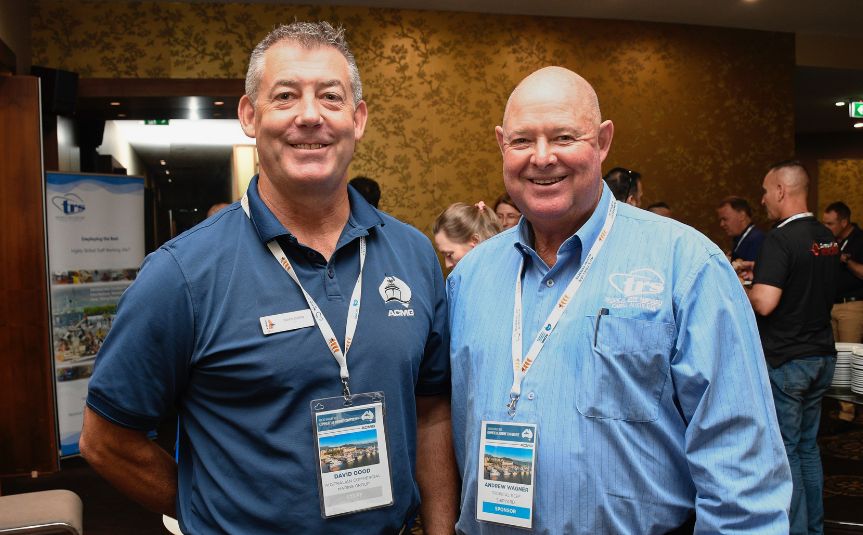
Andrew Wagner, Business Development Manager at Tropical Reef Shipyard and sponsor of the event, commented, “The Maritime Industry Economics struck a chord, highlighting a significant gap between the sector’s proven economic value and current government investment in maritime infrastructure. A common user facility in Cairns, where a unique supplier ecosystem exists, could in a very short time, deliver more prosperity and diversity to the Cairns community and the FNQ region economy.”
Delegates also heard from a range of expert speakers addressing emerging technologies and operational innovations shaping the sector.
Mark Lane, representing SEA.AI, introduced advanced AI-based camera and alerting technology designed to enhance on-water safety by detecting surface hazards that traditional radar and AIS systems may miss, including small craft, debris and persons overboard.
Global biofouling specialist Xavier Doerr from Hullbot explored the growing role of proactive hull grooming and robotics automation in improving vessel efficiency, reducing fuel consumption and supporting fleet decarbonisation.
Penny Haire, CEO and Co-Founder of Tidetech, presented how high-resolution weather, wave and ocean data can support more efficient maritime operations. Drawing on decades of oceanographic research, Tidetech’s models deliver accurate tidal and ocean data designed to improve operational planning and decision-making across the maritime sector.
Brian Cave, General Manager of Operations, Great Adventures, attended the Conference and commented, “The inaugural Great Barrier Reef Commercial Marine Conference was an excellent opportunity to connect with industry and gain valuable insights into the future of Australia’s commercial marine sector. The presentations and discussions throughout the event highlighted the exciting opportunities ahead for sustainable growth.”
The networking lunch that followed the conference offered regional delegates the unique opportunity to come together in an informal setting, continuing conversations from the morning’s sessions and sharing perspectives on the opportunities and challenges facing the commercial marine sector across the Great Barrier Reef region.
David Good, CEO of ACMG, commented on the conference: “The inaugural conference marks an important step in bringing together operators, technology providers and industry leaders to strengthen the commercial marine sector across the Great Barrier Reef region and beyond. With the launch of the Australian Commercial Marine Economic Impact Study, the event also provided the industry with a powerful new evidence base to demonstrate its economic significance and support future advocacy, investment and policy engagement. As the sector continues to grow, the insights from the EIS will play a key role in guiding strategic planning and ensuring the commercial marine industry’s contribution is recognised at both state and national levels.”
Following the success of the inaugural event and the launch of the Australian Commercial Marine Economic Impact Study, ACMG members now look ahead to continuing industry engagement internationally, with a delegation attending Asia Pacific Maritime from 25 – 27 March at Marina Bay Sands in Singapore.